

In one sentence
Type 2 notices what other people need before they ask, and feels valuable when they can take care of it.
Core motivation
What drives a Type 2 is the wish to be loved and needed. They want to matter in the lives of the people around them, and the surest way they know is to give: time, attention, favors, care. Their radar for other people's feelings is always on and rarely wrong.
Their deepest fear is not deserving affection on their own, without doing anything for it. That is why asking, setting limits or saying no is so hard: underneath, they fear that if they stop being useful they will stop being wanted. Much of their generosity is sincere; some of it is a way of securing a place.
How it shows up in remote work
In a remote customer-support, executive-assistant or coordination role, the Type 2 is the one who remembers the client's kid's name, notices when a teammate has gone quiet in the chat and offers to cover the meeting nobody wanted. They build relationships at a distance with an ease that takes other types months.
Their communication is warm and personal. They open a message asking how you are, and they mean it. With difficult clients they show remarkable patience, because they read anger as an unmet need and go looking for it. The risk is that they promise more than their calendar allows, rather than disappoint.
With time and priorities, they tend to put other people's urgent above their own important. Their to-do list fills up with favors. They take feedback well when it comes with recognition; a dry correction with no warmth at all can hurt out of proportion and leave them wondering whether that person still values them.
Strengths
- Real empathy: they read the tone of an email and adjust the reply before the problem grows.
- Loyalty to clients and colleagues, which turns into long relationships and retention.
- Willingness to fill gaps and do what the team needs, not only what the job description says.
- A talent for calming tense conversations and making people feel looked after.
Blind spots
- They do not say no, then resent that nobody returns the favor.
- They struggle to see their own needs until exhaustion or their health forces the issue.
- They can become intrusive: helping when nobody asked for help.
- They measure their worth by how much they are needed, which leaves them exposed to managers who exploit their willingness.
Under stress
Under pressure, the Type 2 first gives more. They work late, take on other people's tasks and smile on every call. But inside they start keeping score: how much they have given and how little has come back. The warmth turns more intense, almost demanding, and remarks appear about everything they have done for everyone.
If the stress continues, the resentment can come out all at once, with a bluntness and hardness that surprises everyone, including them. That is the sign they have gone too long without looking after themselves. At that stage they can also become controlling with the people they help, as if caring gave them the right to decide.
At their best
At their best, Type 2s give without keeping score and without expecting anything back, because they no longer need the other person's response to feel valuable. They can tell helping from taking over, and they know when to step back because the other person can manage.
They also learn to receive. They ask for help naturally, accept a compliment without immediately returning it, and say no with a calm that does not break the relationship. In that state they are one of the most generous and balanced presences a remote team can have.
Where this type moves
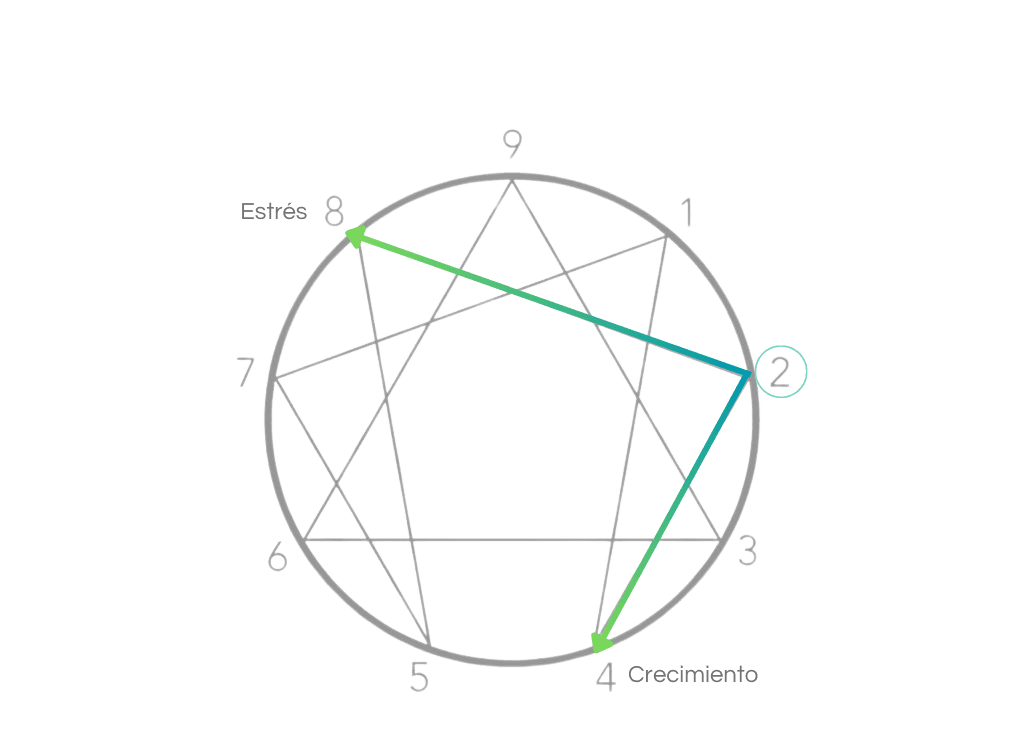
Under stress, toward Type 8 (The Challenger) — Under pressure, a Type 2 moves toward the hard edge of the 8: the person who always helped becomes demanding, calls in the recognition they never asked for and can say things that wound. If you notice you have gone from “don't worry, I'll handle it” to “after everything I did for you”, you are there.
In growth, toward Type 4 (The Individualist) — At their best, a 2 gains what is healthiest in the 4: contact with their own feelings and needs. They stop reading only what everyone else wants and start asking what they want. They can say no without guilt and ask for help without feeling they have lost their place on the team.
The two wings
Type 2 with a 1 wing — More discreet and orderly. Helps by doing things properly: a clean process, a timely follow-up, a promise kept. Finds it harder to let go of control over quality.
Type 2 with a 3 wing — More sociable and ambitious. Wants to help and wants it to show. Shines in sales, account management and client-facing roles, where warmth and results reinforce each other.
Types that get confused with this one
- Type 9 (The Peacemaker) — Both are kind and avoid conflict, but the 9 accommodates so as not to disturb and the 2 moves closer in order to be needed.
- Type 7 (The Enthusiast) — Both are sociable and upbeat, but the 7's energy goes toward experiences and the 2's toward people.
- Type 6 (The Loyalist) — Both are loyal, but the 6 looks for security in the group and the 2 looks for affection from each person.
Growth practices
- Before offering help, wait to be asked. Practice staying quiet for a moment when you notice someone else's need.
- Write down three things you need each week, and take care of at least one before Friday.
- Say no to one small request a week, without over-explaining. Notice that the relationship survives.
- When you feel resentment, turn it into a concrete request to the right person instead of storing it up.
If you work with someone of this type
When you collaborate with a Type 2, check capacity instead of treating an eager yes as unlimited availability. Make it safe to decline, renegotiate or ask for help without having to protect the relationship first. Specific appreciation matters, especially when it names the contribution rather than praising constant availability.
Keep care reciprocal. Ask what they need, share relational responsibilities and address tension privately and respectfully. Do not turn warmth into an obligation or assume support will appear without discussion; clear requests and boundaries let generosity remain freely chosen rather than becoming a hidden debt.
Frequently asked questions
Is Type 2 only good for customer support?
No. Their read on people makes them valuable in recruiting, community management, onboarding and team coordination. What they need is a role where relationships matter and their effort is visible.
How is it different from Type 9?
The 9 helps to keep the peace and would rather not stand out; the 2 helps to connect and wants their contribution to count. Faced with conflict, the 9 withdraws and the 2 moves in to fix it.
What is the sign that a Type 2 is burning out?
Remarks about everything they do for others, complaints that nobody appreciates them, and a physical tiredness that appears suddenly. When you see that, the fix is not more recognition but helping them drop tasks.