

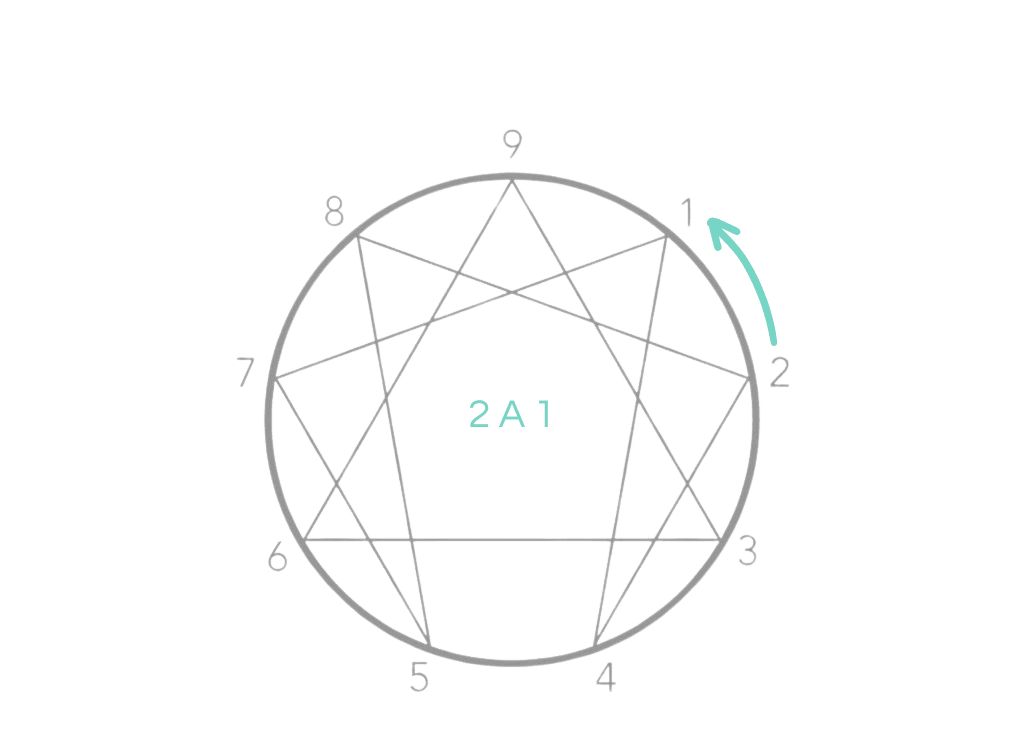
How this wing shapes the type
The 1 wing gives Type 2 method and discretion. They still want to be useful and loved, but their way of helping runs less through visible warmth and more through doing things properly: a timely follow-up, a tidy file, a promise kept without anyone having to remind them. Their generosity has rules, and they are the first to follow them.
They tend to be more reserved and harder on themselves than the Type 2 with a 3 wing. They care less about being liked and more about being right by the people they serve. When they help, they want the help to be of good quality, and they can feel guilty if they think they did not give enough or gave it with mistakes. The mix of care and duty makes them very dependable, but also tougher on themselves.
How it shows up in remote work
In a remote executive-assistant, admin or support role, this is the person who remembers the team's birthdays and also keeps the spreadsheet current. They handle clients with patience and order: every case is logged, every commitment has a date. Their writing is warm but precise, with no excess and no slips.
With clients they are dependable and a little formal. They care about doing the right thing for them, not only about pleasing them, and they can say no when something goes against the process, even though it costs them. They tend to correct gently, but they do correct, and that sometimes surprises someone who expected only kindness.
Over time, they combine other people's needs with their own standard, and the result is an overfull calendar. They take feedback seriously; a criticism of the work feels like a failure in how they care, and they can spend days going over what they did wrong.
Strengths
- Help with quality: being there is not enough, it has to be solved well.
- Discretion and respect for other people's limits, more than the pure Type 2.
- Orderly processes in roles that are usually chaotic, such as customer support.
- An ethical sense that makes them tell the truth even when it is not what the client wants to hear.
Blind spots
- Harsh self-criticism when they feel they did not help enough.
- Can become rigid about how one should help, and judge those who do it differently.
- Stores resentment more diligently, so it comes out later and stronger.
- Finds it hard to ask for themselves, because it feels like a fault.
Growth focus
- When you finish helping someone, write down what went well before writing down what was missing.
- Let another person help in their own way, even if it is not yours, and do not correct it.
- Ask for something small for yourself each week, without justifying it by the good of the team.
Back to Type 2
The Helper — Read the full Type 2 profile: motivation, wings, look-alike types and growth practices.