

In one sentence
Type 7 sees possibilities where others see problems, and finds it hard to stay with one when three appear.
Core motivation
What drives a Type 7 is the wish to live fully: to learn, try things, meet people, always have something interesting ahead. Their mind generates ideas and plans at a surprising speed, and their energy is contagious in any team. They want freedom to choose and variety so they never get bored.
Their deepest fear is being trapped in pain, deprivation or boredom with no way out. So they always keep a door open and an alternative ready, and that is why staying with an uncomfortable feeling or a tedious task is so hard. The optimism is genuine, but sometimes it is also a way of not looking at what hurts.
How it shows up in remote work
In a remote sales, marketing, community or high-contact support role, the Type 7 is the one who lifts the mood of the Monday meeting, suggests the idea nobody dared to say and turns an angry client into a laughing one. They work fast and pick up new tools without a manual.
Their communication is quick, witty and positive. They prefer a short call to a long document and tend to reply with enthusiasm before they have read everything. With clients they are charming and solution-minded, with the risk of promising fixes that do not exist yet. Long messages and detailed rules weigh on them.
Over time they start many things and finish fewer. They get distracted by the new, underestimate how long routine work takes and arrive just at the deadline. They seem to take feedback lightly, but a criticism that makes them feel limited or boxed in affects them more than they show.
Strengths
- Energy and optimism that carry a remote team through hard weeks.
- Speed in learning, adapting and finding creative solutions.
- Ease in connecting with all kinds of people and creating opportunities.
- A view of possibilities where others see only limits.
Blind spots
- Leaving tasks half-done when something more interesting shows up.
- Avoiding hard conversations and uncomfortable feelings, their own and other people's.
- Over-committing and then having to choose which promise to break.
- Confusing being busy and entertained with making progress.
Under stress
Under pressure, the Type 7 speeds up and scatters. They open more fronts, fill up on meetings and new ideas, and avoid the issue that worries them. They can become impatient and impulsive, making quick decisions just to feel they are moving. The team sees a lot of activity and little closure.
If the stress continues, a harder, more demanding version shows up: critical of others, intolerant of mistakes, with a perfectionism that is not natural to them. That is the sign the optimism has stopped being enough and they need to stop and look at what they were avoiding.
At their best
At their best, Type 7s keep the joy but gain depth. They choose a project and finish it, stay in a difficult conversation to the end, and discover that the satisfaction of closing something is different from the thrill of starting it.
They become calm and grateful, able to enjoy what they have without constantly reaching for the next thing. Their energy focuses, and then their gift for creating opportunities turns into concrete results for the team.
Where this type moves
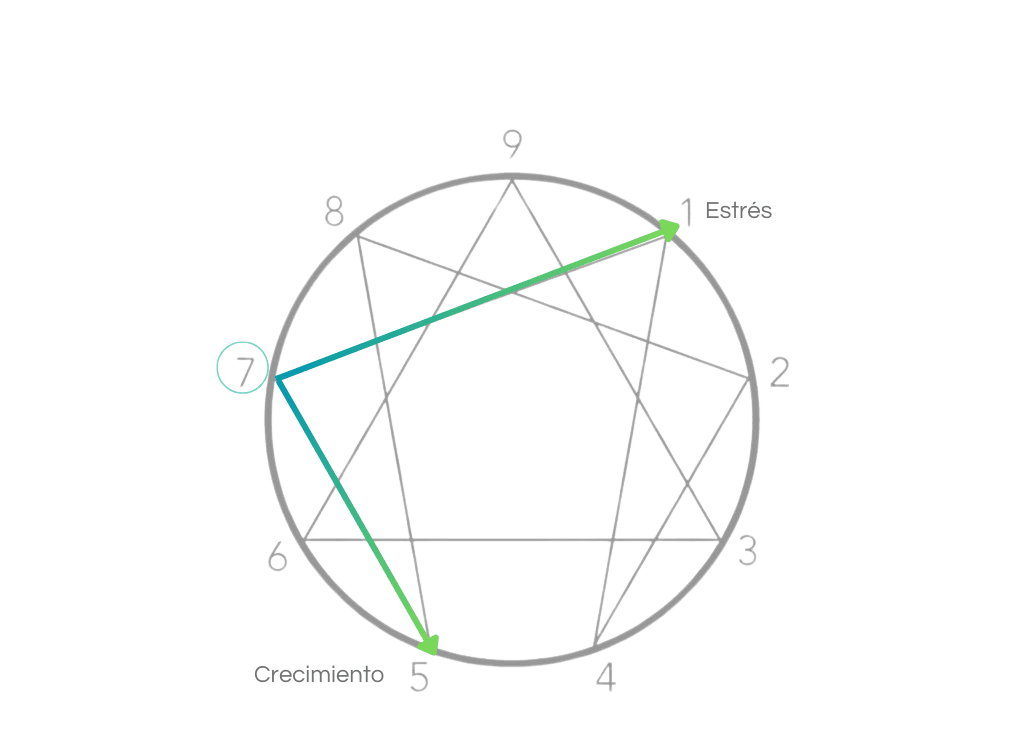
Under stress, toward Type 1 (The Reformer) — Under stress, a Type 7 hardens like a 1 in a slump: enthusiasm turns into criticism, they get rigid about details and perfectionistic with other people, and they lose patience with anyone who cannot keep their pace. The person who made everything light suddenly cannot stand a job done badly.
In growth, toward Type 5 (The Investigator) — When they feel secure, a 7 takes on the depth of the 5: they stay with one thing, study it to the bottom and tolerate the boredom they used to flee. They discover that concentration is not a cage; it is what turns their ideas into something other people can use.
The two wings
Type 7 with a 6 wing — More collaborative and responsible. Wants to enjoy the work and also to come through for the team, which makes them steadier. Often the life of the group without losing sight of commitments.
Type 7 with an 8 wing — More decisive and direct. Chases opportunities hard and is not afraid of risk or confrontation. Does well in sales and in roles that require opening a path.
Types that get confused with this one
- Type 3 (The Achiever) — Both are fast and optimistic, but the 3 chases goals and recognition, and the 7 chases variety and experiences.
- Type 2 (The Helper) — Both are sociable and warm, but the 2's energy goes toward people and the 7's toward possibilities.
- Type 8 (The Challenger) — Both have a lot of energy and take initiative, but the 8 seeks control and the 7 seeks freedom.
Growth practices
- Before starting something new, finish one pending thing. Just one, but completely.
- When you want to avoid an awkward conversation, schedule it for that same week and go in with a prepared question.
- Cap your active commitments at three. Write them down and do not accept the fourth until you close one.
- Spend five minutes at the end of the day noticing what you felt, without changing it or distracting yourself.
If you work with someone of this type
When you collaborate with a Type 7, capture agreements, priorities and timing clearly while leaving room for ideas. Name the real constraints at the beginning so possibility and commitment can coexist. If enthusiasm moves ahead of the details, return to the shared plan without treating curiosity as the problem.
Value their imagination and also invite pauses long enough to notice concern, disappointment or fatigue. Break follow-through into visible next steps and check what still matters when a new option appears. A clear frame is most useful when it supports choice rather than becoming a contest over freedom.
Frequently asked questions
Is Type 7 unreliable?
No, but they need structure to hold their commitments. With clear deadlines and few open fronts they are among the most productive and creative people on a team. Without that, their energy scatters.
Which remote roles suit them best?
Sales, marketing, community management, high-contact customer support and any role with variety and people. They switch off in repetitive, solitary tasks with no room to propose anything.
How is it different from Type 3?
Both are fast and upbeat, but the 3 organizes around goals and how the result looks; the 7 organizes around what interests them and what they want to experience. The 3 finishes in order to win; the 7 starts in order to enjoy.