
In one sentence
Type 4 feels life more intensely than most, and needs what they do to carry a stamp of their own.
Core motivation
What drives a Type 4 is the search for an authentic identity: knowing who they are, expressing it, and having that seen. They pay enormous attention to what they feel and what it means, and they distrust anything that seems generic or put on. They want their work, their writing, even their workspace to say something about them.
Their deepest fear is having no identity of their own, being ordinary or, worse, flawed in a way other people are not. From that comes a background sense that they are missing something others have. That lack drives them to create and to go deep, but it can also make them compare themselves and feel left out.
How it shows up in remote work
In a remote design, content, community or human-touch support role, the Type 4 brings a sensitivity that cannot be taught: they catch the nuance in a message, write in their own voice and notice when a brand sounds fake. They are the colleague who suggests a better way to say something, and they are usually right.
Their communication is honest and expressive, sometimes more than a work chat expects. They prefer conversations with substance to operational back-and-forth. With clients they are empathetic and personal, and they can sit with someone who is upset without reaching for a script. The risk is reading a neutral comment as a judgment.
Over time their output rises and falls with their mood: there are days of enormous production and days when a routine task feels impossible. Feedback lands with intensity; a criticism of the work can feel like a criticism of who they are. They need managers who separate the two clearly.
Strengths
- Sensitivity to emotions and nuances that other people miss.
- A voice of their own in writing and design; nothing they deliver sounds like a template.
- The ability to accompany people through hard moments without becoming uncomfortable.
- Honesty about what works and what does not, even when it is awkward.
Blind spots
- Letting mood decide what gets done today, so the boring tasks pile up.
- Taking personally what is not personal, and withdrawing in silence.
- Idealising the project they do not have and undervaluing the one they do.
- Difficulty with routine and with processes that leave no room for interpretation.
Under stress
Under pressure, the Type 4 pulls back. They reply less in the channels, fall behind on tasks they used to do easily, and start feeling that nobody understands what they bring. Sensitivity turns into touchiness: a change of plan without explanation can feel like a slight.
If the stress continues, they can slip into a dependence that is unlike them: seeking constant reassurance, overplaying affection so as not to lose people, and losing the judgment that made them valuable. That is the sign they need structure and support, not more space.
At their best
At their best, Type 4s keep their depth but are no longer at its mercy. They handle routine work with discipline because they understand that structure holds creativity up, and they produce steadily without waiting for the perfect mood.
They become someone who can turn what they feel into something useful for others: a text that moves, a design that communicates, a conversation that helps. They accept themselves as they are, without needing to be different, and discover they can belong without ceasing to be themselves.
Where this type moves
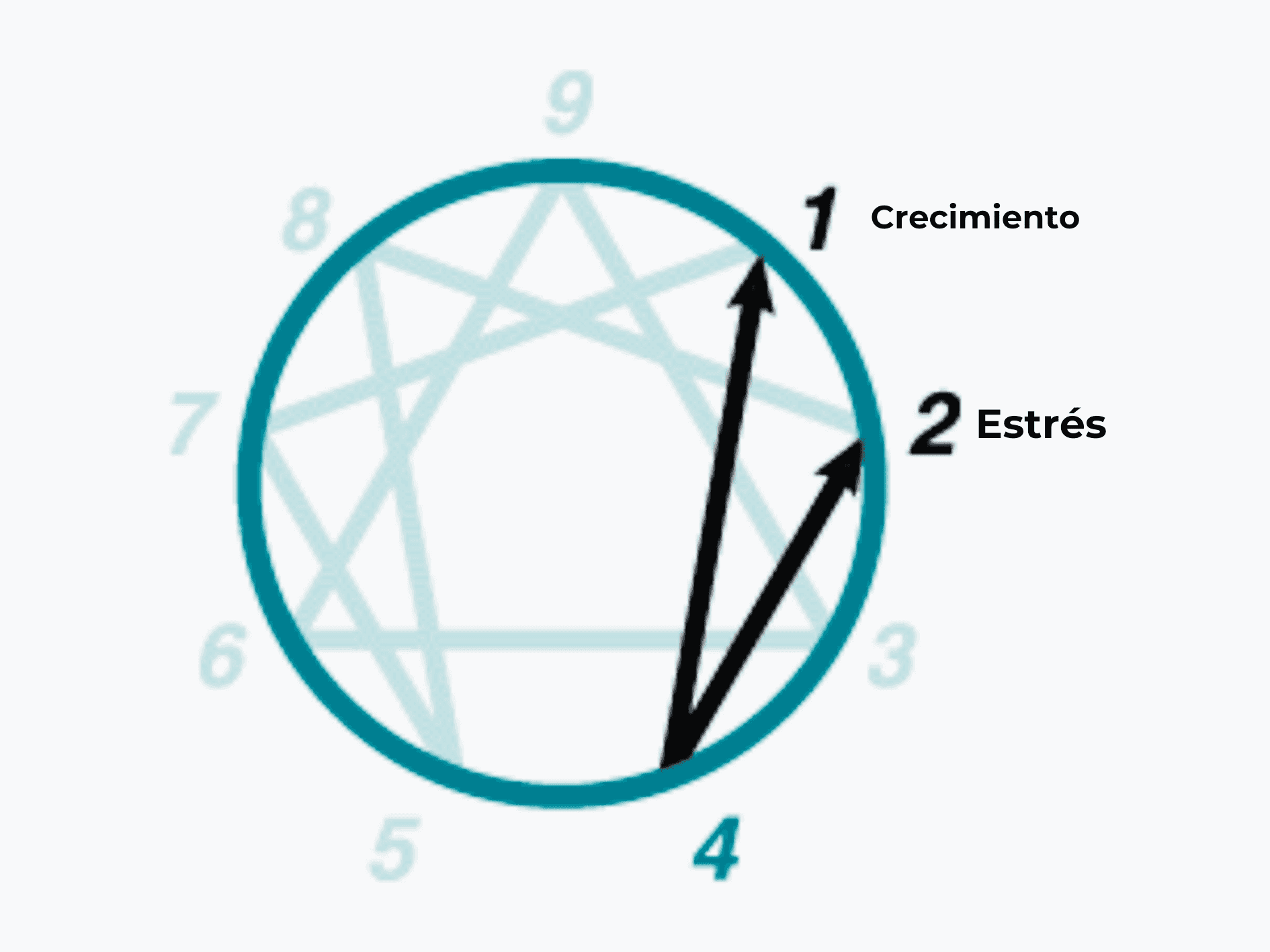
Under stress, toward Type 2 (The Helper) — Under pressure, a Type 4 starts acting like a 2 in its less healthy form: seeking approval, becoming accommodating and over-helping in order to feel needed, while resentment builds underneath. If you find yourself saying yes to everything so that people will notice you, pay attention.
In growth, toward Type 1 (The Reformer) — When they feel secure, a 4 gains the discipline of the 1: they finish what they start, keep a routine without feeling it betrays their creativity and turn sensitivity into concrete, on-time work. They stop waiting for inspiration and find that consistency is also a form of authenticity.
The two wings
Type 4 with a 3 wing — More sociable and more inclined to show their work. They want their creation to be their own and also recognized. They do well in visible roles such as brand content or presentations.
Type 4 with a 5 wing — More introverted and analytical. They prefer to go deep alone and express themselves through careful work rather than in meetings. Well suited to research, writing and detailed design.
Types that get confused with this one
- Type 9 (The Peacemaker) — Both can seem withdrawn, but the 9 withdraws to feel less and the 4 withdraws to feel more clearly.
- Type 2 (The Helper) — Both are emotional and relationship-focused, but the 2 wants to be needed and the 4 wants to be understood.
- Type 5 (The Investigator) — Both seek depth, but the 5 looks for it in ideas and the 4 in feelings.
Growth practices
- Pick one routine task and do it at the same time every day for two weeks, without waiting to feel like it. Notice how your relationship with it changes.
- When a message stings, wait an hour before replying and reread it, looking for the most neutral interpretation available.
- Every Friday, write down three concrete things you did well, with the same attention you give to what is missing.
- Share a piece of work before it feels perfect. Early feedback saves you weeks.
If you work with someone of this type
When you collaborate with a Type 4, explain the purpose behind a decision and agree on boundaries while leaving room for a personal approach. A change without context may feel dismissive, so name what changed and what did not. Take their emotional response seriously without assuming it is the whole story.
Keep feedback about the specific contribution rather than turning it into a judgment about the person. Recognize the perspective they brought, and use clear timing and next steps to give creativity a dependable container. Speak person to person; an impersonal exchange can obscure the connection they need to stay engaged.
Frequently asked questions
Is Type 4 too sensitive for remote work?
No. Distance gives them room to work at their own pace with less social noise, which usually suits them. What they need is clear communication and some regular human contact, so that sensitivity does not turn into isolation.
Which roles suit them best?
Design, writing and content, community management, customer experience and any work where the quality of expression matters. They also stand out in supporting people through difficult moments, where their empathy is a real advantage.
How is it different from Type 9?
Both can seem calm and a little withdrawn, but the 9 avoids conflict and would rather not stand out, while the 4 wants to be seen as they are and has no problem being different.