

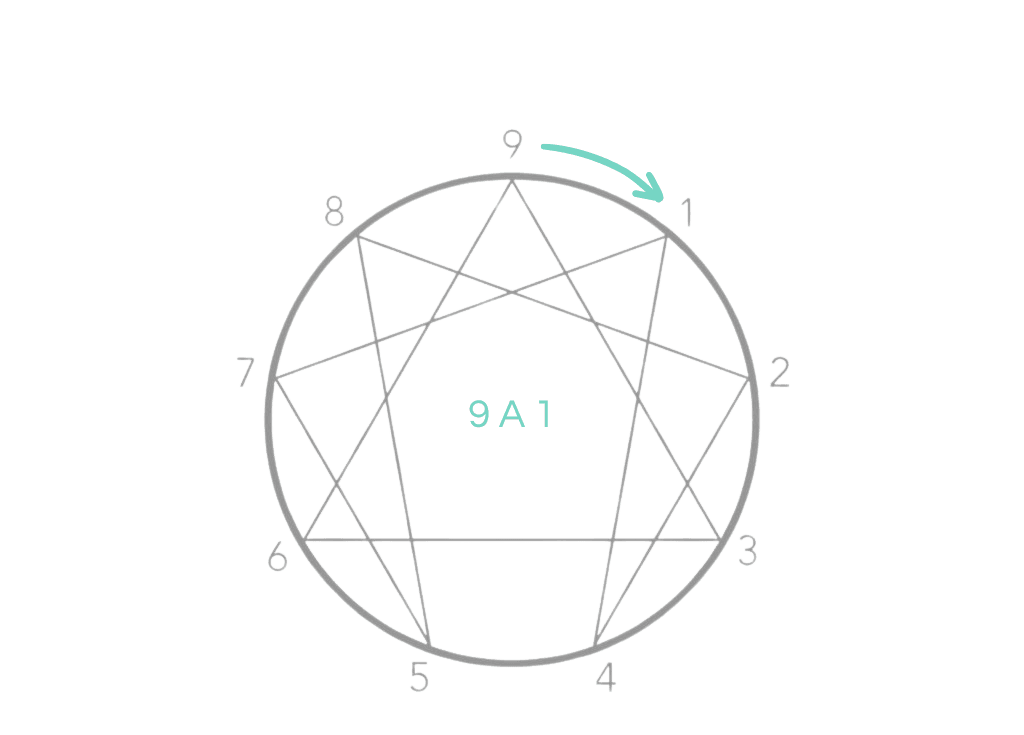
How this wing shapes the type
The 1 wing gives Type 9 order, principles and a sense of duty. They still seek harmony and avoid conflict, but now there are things they care about doing well, and a certain ideal of how things should be. This is the most responsible, structured version of Type 9, and the one best at sustaining processes that need care.
They tend to be more reserved and more self-critical than the Type 9 with an 8 wing. They combine calm with a discreet exactingness, and they can feel guilty when they put off something they know they should have done. They have a strong sense of fairness, though defending it out loud is hard when it means an argument.
How it shows up in remote work
In a remote admin, support, document-management or customer-service role with defined processes, this is the person who does the work carefully, quietly and without mistakes, and who stays calm when the client does not. They follow the procedures and improve them in silence. Their writing is correct, kind and orderly.
With clients they are patient and dependable, with a kindness that does not sacrifice precision. With the team they are steady and discreet, and sometimes too invisible: they do not ask, complain or stand out. The risk is the combination of procrastination and guilt: they put off the uncomfortable, feel bad for putting it off, and the discomfort paralyses them further.
Over time they are steady and predictable. They take feedback calmly and seriously, perhaps too seriously: a minor correction can circle silently for several days without anyone noticing.
They do well with a manager who asks for their opinion explicitly and assigns concrete deadlines, because without them the uncomfortable gets postponed and nobody notices. In return they deliver careful work and a calm that steadies the rest of the team.
Strengths
- Calm combined with care: they do not get flustered and they do not get sloppy.
- Reliability in long, detailed processes.
- A sense of fairness that balances a team.
- Improves procedures without needing the spotlight.
Blind spots
- Putting off the uncomfortable, then feeling guilty, which paralyses them further.
- Invisibility: the team forgets they have an opinion.
- Silent self-criticism after a correction.
- Discreet rigidity toward process changes they disagree with.
Growth focus
- Start the day with the task that makes you most uncomfortable, and finish it before opening email.
- State one opinion of your own in every team meeting, even if it matches someone else's.
- When you receive a correction, reply the same day with what you will change, and close the subject.
Back to Type 9
The Peacemaker — Read the full Type 9 profile: motivation, wings, look-alike types and growth practices.