

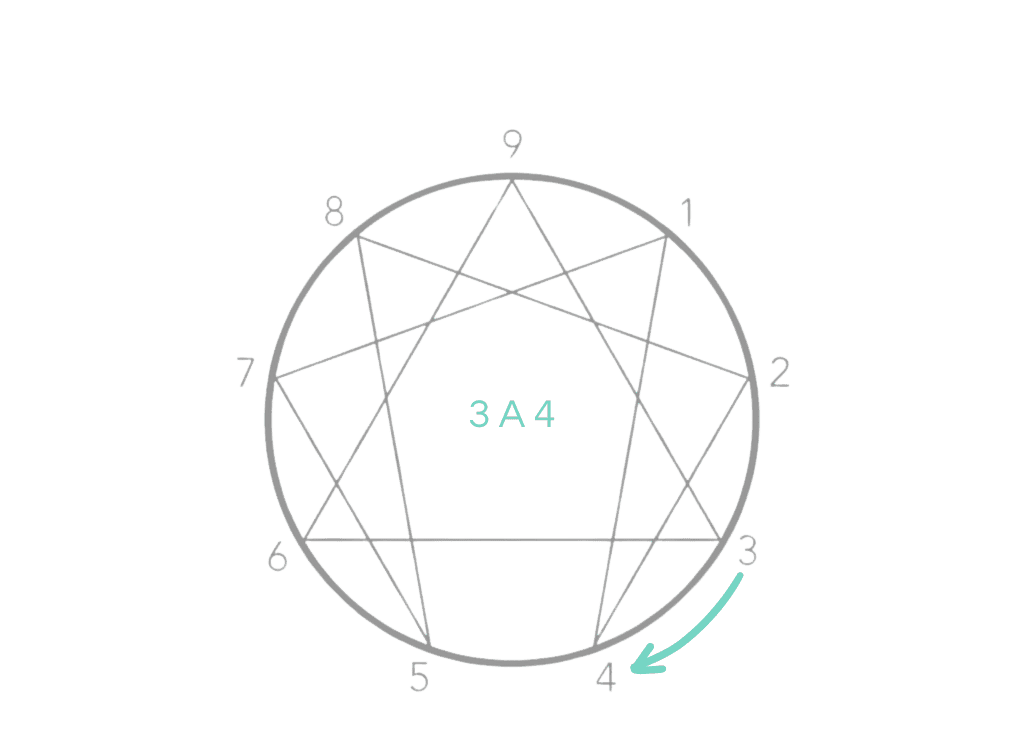
How this wing shapes the type
The 4 wing gives Type 3 depth and a personal stamp. They still want to achieve and stand out, but it is not enough for the work to look good: they want it to be genuinely good and to carry something of their own. This is the most reserved, introspective version of Type 3, more interested in quality and in the respect of people who know than in general applause.
They tend to be harder on themselves and more sensitive to criticism than the Type 3 with a 2 wing. They work more independently, with less need to be liked and more need to be respected for their judgment. They can swing between a highly polished image and moments of doubt about whether what they do is worthwhile, which they almost never show.
How it shows up in remote work
In a remote design, content, consulting or creative project-management role, this is the person who delivers work with a professional finish and a recognisable voice. They prefer projects where they can decide the how, not only meet the what. Their writing is careful and precise, with more attention to form than most.
With clients they are competent and a little distant: they convey confidence and command, but do not seek closeness. With the team they are quieter than other Type 3s, and can seem to compete in silence. The risk is that aesthetic standards delay delivery, or that a criticism of the work feels like a criticism of their worth.
Over time they are disciplined, though they can keep polishing beyond what the project needs. They accept feedback from someone whose judgment they respect; a shallow comment on their work bothers them more than a deep, well-argued criticism.
Strengths
- Quality and a professional finish in everything they deliver.
- Independence: they do well in long, solitary projects.
- A judgment of their own that contributes ideas where others only execute.
- Ambition that pushes the team to a higher standard.
Blind spots
- Confusing high standards with delay: polishing when it was time to deliver.
- Taking criticism personally and withdrawing without saying so.
- Competing in silence and not sharing what they know.
- Hiding insecurity behind an image of control.
Growth focus
- Deliver a reasonable version before the final one and ask for comments early.
- When a criticism stings, respond only to what it says about the work, and put it in writing so you do not ruminate.
- Share a technique or a resource with the team that was hard for you to learn.
Back to Type 3
The Achiever — Read the full Type 3 profile: motivation, wings, look-alike types and growth practices.