

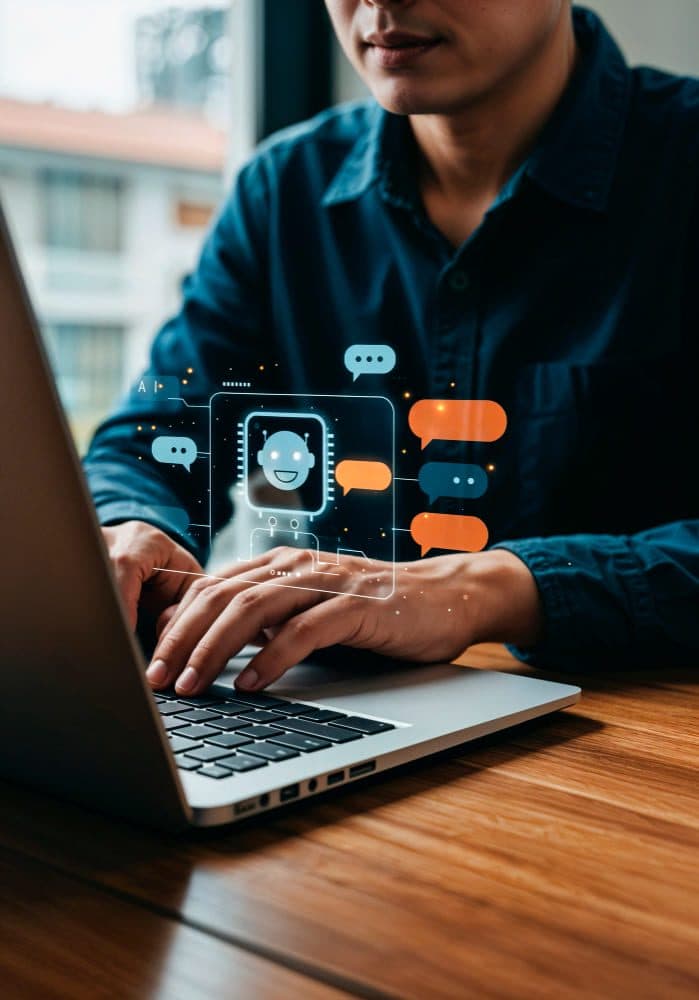
Artificial intelligence is no longer a single tool it’s a connected ecosystem. Agentic AI represents a new stage in this evolution: a network of specialized AIs that communicate, delegate, and collaborate like a team of digital experts. For small and medium-sized enterprises (SMEs) in the U.S., understanding how these systems work together opens the door to smarter operations, cost savings, and better collaboration with remote professionals across Latin America.
Understanding the Agentic AI Ecosystem
Agentic AI combines multiple intelligent agents, each designed for a specific purpose. One AI might handle data analysis, another focuses on communication, while a third manages creative or strategic tasks. Together, they function as a seamless digital workforce that reduces human error, eliminates bottlenecks, and accelerates decision-making.
This interconnected model mirrors how remote teams already operate in distributed companies: multiple professionals, each with distinct skills, working toward shared goals through integrated tools. The same principle applies here — except the team members are AIs, working together to support human performance and innovation.
Different AIs That Power Agentic Systems
1. Data and Insight Agents
Data-driven agents are the analytical core of Agentic AI. They collect, interpret, and predict trends across multiple data sources, providing business leaders with real-time insights. When connected with strategy and communication agents, they form an intelligent loop that helps companies act faster and smarter.
This kind of intelligence also enhances global collaboration. As more businesses embrace hybrid structures and expand their reach through Latin American talent, data agents help identify high-performing markets, cost-efficient roles, and areas where human creativity can complement automation.
2. Workflow and Productivity Agents
Workflow agents keep everything moving. They automate tasks like scheduling, follow-ups, and reporting, ensuring projects never stall. When linked to other AIs, they create a dynamic system that self-adjusts — prioritizing tasks, reallocating time, and alerting teams when action is needed.
Their impact is similar to the shift seen in how remote support is redefining personal productivity, where automation and digital assistants streamline executives’ workloads and free up space for higher-level thinking. For SMEs, this means more focus on growth and less time spent on repetitive administration.
3. Creative and Strategic Agents
Agentic AI doesn’t just analyze — it creates. Creative agents can design, write, or brainstorm ideas, while strategic ones refine brand voice, campaigns, and positioning. When these AIs collaborate, they accelerate the entire creative cycle.
The combination of human designers and AI tools has already transformed creative workflows in remote design projects. In an Agentic AI system, that collaboration becomes constant and automatic: the creative agent produces options, the strategy agent tests audience response, and the data agent refines the next iteration — all in real time.
4. Communication and Decision Agents
These AIs act as translators between systems and people. They summarize reports, deliver insights to the right departments, and even propose next steps. For remote and hybrid SMEs, they become the glue that keeps human and digital workflows aligned.
When combined with the interpersonal skills of professionals from Latin America — known for adaptability, communication, and creative problem-solving — these agents help companies scale operations without losing their human touch.
Why Agentic AI Is a Game-Changer for SMEs
What makes Agentic AI revolutionary isn’t just automation — it’s coordination. Traditional AI tools often work in isolation, but Agentic AI systems communicate continuously. Each agent enhances the output of another, creating exponential value.
For small and mid-sized companies, this translates into higher efficiency at lower cost. While AIs handle operational work, humans focus on empathy-driven decisions, relationship building, and innovation. Many organizations are already finding the right balance between machine precision and human creativity — a combination that drives real, sustainable growth.
Building Smarter Teams with Human + AI Integration
The next generation of teams will not be “AI vs. human,” but “AI plus human.” Agentic AI allows SMEs to connect multiple tools that augment every department, from marketing and sales to operations and HR.
A marketing assistant, for instance, could use one AI to analyze performance, another to generate ad copy, and a third to schedule posts — all synchronized automatically. Meanwhile, the human team supervises quality, context, and emotional resonance.
Forward-thinking businesses are already harnessing AI tools to optimize remote talent, proving that the future of productivity lies not in replacement, but collaboration. SMEs that combine strategic automation with skilled Latin American professionals are positioning themselves for long-term success.
The Next Business Leap
Agentic AI is transforming how companies operate, making technology more adaptive, collaborative, and human-centered. It allows SMEs to scale like large corporations — without losing flexibility or personality.
The most successful organizations will be those that see AI as a partner, not a threat. By connecting intelligent systems with human professionals who bring empathy, intuition, and creativity, businesses can unlock new levels of innovation and efficiency.
Build your own hybrid team of AI-powered systems and top Latin American professionals. Visit WeRemoto to find the talent that will take your company to the next level.